

Relations between Lithuania and Romania
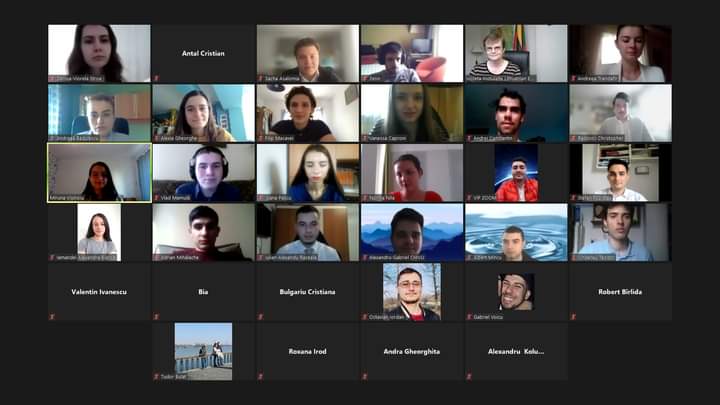
by Dr. Violeta Motulaite , for The World Affairs Forum workshop organized by Volunteers for Ideas Projects, April 24, Bucharest. Romanian historian, Dr. Silviu Miloiu wrote in 2017: “Although the distance between Suceava, the medieval capital of Moldova, and Vilnius is les then 1 000 km and Principality of Moldova of Stephan the Great neighbored the state of Jagiellonians, in most cases, the legacy of the relations between Romania and Baltic nations played little role in feeding a sense of solidarity or complementarity between these nations.”
Romanian historian Florin Angel asked in 2018: “What did Romania know about Lithuania and Lithuanians before 1914? Not much, I suppose, except for some medieval incidents regarding Moldavia. One can trace political contacts between the Grand Duchy of Lithuania (GDL) and Principality of Moldavia from the very beginning of the Existence of Moldavia as a sovereign state. Grand Duchy of Lithuania by the middle of 14th century was involved in political processes of the northern Black Sea region.” Though direct contacts between the rulers of both countries remained irregular, it is known that Voivode (Prince) Alexandru (1400-1420) was married to a sister of Grand Duke Vytautas, Ringaile. Also, the Lithuanian leader preserved a strategic military and commercial fortress on the Moldovan Black Sea coast, near Cetatea Alba city. Vytautas managed to achieve control of the ways between the Baltic and Black Seas. Military of both countries took part in battles near Vorskla River in 1399, small Moldavan unit took part in the Battle of Grunewald in 1410.
I cannot refrain from mentioning of the most significant bilateral relations factor in 16 century, namely the almost at one time establishment by Stephen Bathory (Transylvanian Voivode and King of Polish – Lithuanian Commonwealth) of Vilnius University in 1579, and the inauguration of Jesuit school near Cluj in the same year. These schools were united in a single educational unit in 1581, when the same Stephen Bathory signed in Vilnius the founding document of the Jesuit College of Cluj. The first rector of the College of Cluj was Polish citizen Jacobus Wujek, former rector of the College of Vilnius.
Other diplomatic relations in the Middle Ages were limited mostly to arrival and departure of envoys, letters of accreditation, diplomatic literature, as well as possible drafts of alliance treaties between two countries. There are documents which testify the existance of economic relations as well. Moldova shared a common border with GDL in 14-16 centuries, and after 1569, with Polish – Lithuanian Commonwealth, until the latter ceased to exit due to the partitions, when Lithuania was included into the Tsarist Russia at the end of the XVIII century.
There was no knowledge about the emerging modern Lithuanian nation and state, at the end of the 19th and beginning of the 20th century in the domestic political debates of Romania. A lot of the common views about Lithuania were coming from Polish side – novels, historical writings – and induced a common nation, the co-called Rzeczpospolita. Many Romanians still think that Lithuania was nothing but about a province of the Polish Commonwealth, as was Bessarabia for them.
After December 1918, after the unification of Romania, the political elites from Bucharest started to show interest in building a “sanitary cordon” between Baltic and Black Sea towards Red Russia. Most important neighbor became Poland. An ally of this country, Romania accepted Poland’s policy toward Lithuania. A lot of common information about the Baltic States arrived in Romania from Warsaw. Romanians were strongly influenced by Poland in the first years after 1918 even to the extent that they borrowed Polish semantics for Lithuanian geographical locations such as Wilno and not Vilnius, Kowno and never Kaunas, Druszkieniki and not Druskininkai. The political and military alliance with the Poles turned out to be much more important in comparison with the possible cooperation with the unknown Lithuanians. No wonder that until the end of the 30s governmental officials and politicians from Bucharest and Kaunas (provisional capital of Lithuania in 1920-1940) had no direct contacts.
February 16, 1918, when Independence Act of Lithuanian Taryba (Council) was declared, had no reaction in Romania. Only on August 24, 1924, after an insistent appeals from Lithuanian side, Romania recognized Lithuania officially, being the last Europe state to do so. It was only at the end of 30’s that between Kaunas and Bucharest new avenues in bilateral relations had opened, under the impact of the decision of foreign minister Nicolae Titulescu in 1934 to create a Romanian Legation to cover Lithuania from Riga (Latvia). Romanian envoy in 1938 held in Kaunas a series of four conferences about the medieval legend of Romanian origin of Lithuanians and Latvians, the Lithuanian relations with Moldova in the 14th and 15th centuries, the trade relations between the Black and the Baltic seas through Moldova in 14th to 18th centuries and an overview of the Romanian history. The Lithuanian diplomatic representation to Romania was establishes in 1924 from Prague.
The strategic Romanian – Polish partnership, stated in the Defensive Convention of March 3, 1921 was, certainly, one of the most important in projecting the Romanian diplomacy on the East European and Baltic areas. Polish leadership wished that Romania maintained its reserved relations with Lithuania, under the strict control of Warsaw.
During the two interwar decades, not a single visit at governmental level could be noted, and no reference could be made to a relevant bilateral document. Human, commercial, intellectual exchanges between two countries were maintained at fragmented level.
Diplomatic relations between Lithuania and Romania were interrupted after the Molotov- Ribbentrop Pact was signed. The names of Romania and Lithuania were unfortunately included in the text of secret Protocol attached to the Treaty. Lithuania, Latvia, Estonia, Bessarabia, Northern Bukovina and the Hera region were annexed to the USSR in summer of 1940. On July 25, 1940 Lithuanian envoy extraordinary and minister plenipotentiary in Yugoslavia and Romania Turauskas visited Romanian legation in Bern and gave an official protest note. This was the last visit of Turauskas as a diplomat and his last meeting with Romanian diplomats.
In the final years of the Second World War, the issue of the Baltic States did not occur on the list of the most important problems of the Western Great Powers’ policy and was treated as additional negotiating point. Lithuania once again became a prat of the Soviet Union for almost five decades.
In 1991 Soviet Union came apart. Evaluating Lithuania’s role in this process, professor S.Miloiu wrote: “The years 1989-1991 were decisive for Lithuania and Romania, and one could dare to say that Lithuanian and Baltic drive towards democratization within the Soviet Union and eventually separation from the USSR gave an impetus not only to proclamation of the Republic of Moldova as an independent state. It also spread the fresh air of democracy, solidarity and courage which made possible also the Romanian revolution of December 1989”.
Lithuania started to be recognized internationally, first was Iceland. Most of the other states gave their recognition and established diplomatic relations with Lithuania after the coup in Moscow in August 1991.
Romania recognized independence of the Baltic States on 26 August, 1991.
On September 13 the diplomatic relations between LT and RO were officially resumed. The same day RO MFA Adrian Nastase visited Vilnius. This was the first visit of Romanian Minister of Foreign Affairs to Lithuania. This year we will mark 30 years anniversary of reestablishment of diplomatic relations. Unfortunately due to pandemics, we will not be able to organize public events.
RO opened Embassy in Vilnius in 1992, LT opened Embassy in Bucharest in 2006. The Honorary consulate of the Republic of Lithuania was opened in Ploiesti in 2013. Honorary consulate of Romania was opened in Klaipeda in 2014. I am the third Lithuanian ambassador residing in Bucharest.
Former Lithuanian ambassador V.Jarmolenko wrote: There was another 20 years needed for the historians of our countries to “open forgotten histories” of the bilateral relations between Lithuania and Romania. Thanks to an enthusiastic person, professor, Dr. Silviu Miloiu, there was established the Romanian Association of Baltic and Nordic Studies in “Valahia” university in Targoviste”, which joined efforts of scholars from Iasi, Cluj-Napoca, Bucharest and Constanta. There are courses on Baltic and Nordic studies taught at Valahia University of Targoviste.
Both Lithuania and Romania joined NATO in 2004. Lithuania was accepted into EU in 2004 and RO in 2007. This year marks a borderline in the history of relations between the two states.
Since reestablishment of diplomatic relations between LT and RO there were many visits of high officials. The most recent visit to Bucharest was the visit of the Vice minister of foreign affairs of the Republic of Lithuania on April 15, 2021. RO Minister of foreign affairs visited Vilnius in March 2020.
During the visit of the President Klaus Iohannis in Vilnius in 2016, ministers of foreign affairs have signed protocol on bilateral consultations. LT and RO cooperate on the issues of Belarus, Ukraine, Russia, Eastern Partnership, EU Agenda, EU enlargement, NATO, energy security, support each other in the international organizations. Though relations are friendly and intense, but there is a lot of possibilities to expand them.
Both countries have interests in cooperation in security and defense areas, having in mind similar threats in the Baltic and Black Seas Areas. Both countries are among the NATO countries which committed to spend more than 2 % of GDP for the defense. Both countries belong to NATO Eastern Flank. Both are interested in NATO allies’ military presence on their territories. RO and LT cooperate in developing of EU Rapid response Cyber forces. Both countries participate in the process of development of military mobility.
Countries actively cooperate in Bucharest 9 security format. Last ministerial meeting of B9 took place in Vilnius in Mach 2020. On May 10th this year, Bucharest in cooperation with Poland, will organize B9 Summit on-line.
LT and RO are like minded countries in Eastern Partnership issues. Both countries support deeper eurointegration of Eastern partners, promote deeper cooperation in all spheres. Special attention recently was payed to Belarus. LT and RO recognize elections of Lukashenko as illegitimate, support civil society initiatives, condemn violation of human rights and urge EU to increase sanctions toward Belarus officials and to prepare EU support plan for the future democratic Belarus. Lithuania takes lead in this process.
In October 2020 Lithuanian Embassy in Bucharest together with the Romanian partners have organized international conference on-line “Belarus choosing its future: between threats and opportunities”, where vice ministers and State secretaries of foreign affairs of LT, RO and Poland took part. In January 2021 Embassies of LT, PL and RO in Paris organized video conference ”The EU and Belarus in 2021”, where Ministers of foreign affairs of LT and RO took part.
Both countries belong to Tallinn group for EU Enlargement in Western Balkans.
LT and RO cooperate in the Three Seas Initiative and participate in the Three Seas Initiative Investment Fund. RO is one of the founders of this initiative. This project facilitates development of cooperation in infrastructural projects which would interlink countries from Baltic to Black and Adriatic Seas.
Economic relations between our countries are not very intense, though since 2009 we observe constant growth. Lithuanian business participate in construction, logistics, trade, management of hotels sectors in Romania. Romanian business participates in recycling of PET bottles industry in Lithuania. Trade volumes and FDI are comparatively low. Trade turnover in 2020 was 194,62 mln. Euro, RO FDI in LT amounted to 6,14 mln. Euro, LT FDI in RO was 16,24 mln. Euro.
Summarizing, LT and RO currently have the best bilateral relations ever. We have to use this moment. It is high time, despite pandemics, to work on expansion of our relations, increase people to people and business contacts, increase knowledge of each other, overcome stereotypes, which were formed during the last century.
We have a lot in common. Even simple actions, such as planting of 100 oaks in 2018 in the park in Bucharest, commemorating both 100 years since reestablishment of the State of Lithuania and 100 years of Unification of RO, could be a good beginning in the right direction.